
Enterprise Systems & Modernization
Complex applications, modernization and integrations that have to fit around live operations.

Clio Infotech Limited, listed on the BSE, works across software engineering, enterprise applications, cloud, cybersecurity, AI, data and digital transformation services. Businesses, institutions and public-sector teams come to us to build, improve and support the technology they use every day.
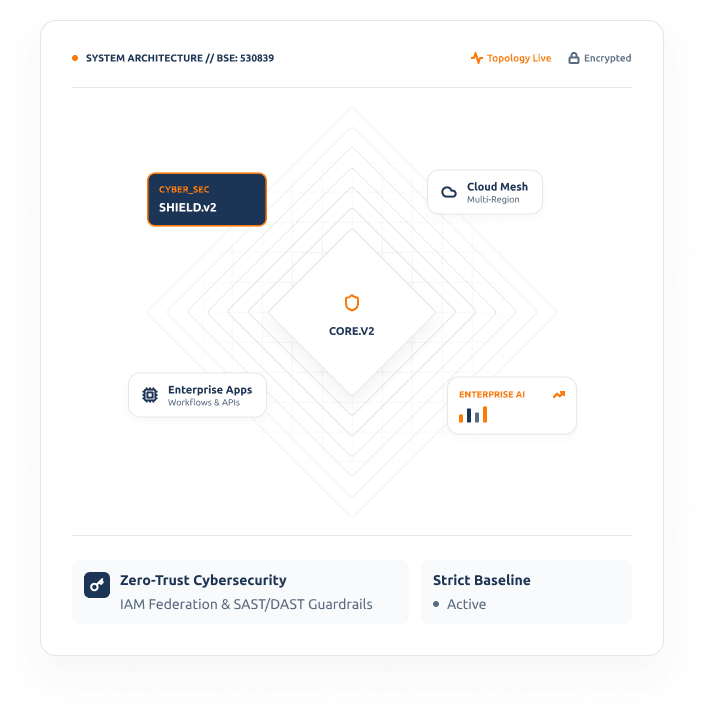
A quick look at where Clio works, how projects are handled and what sits behind the delivery model.
Public company with defined reporting and governance obligations.
Work across commercial, institutional and public-sector programs.
One team can carry work from planning through release and support.
Software, cloud, cybersecurity, AI, data, blockchain and enterprise systems.
Quality and security checks happen throughout the delivery cycle.
Delivery can be arranged across teams, locations and operating environments.

Technology work rarely stays in one lane. A new platform can involve cloud, security, data, integrations and support at the same time. Clio Infotech Limited works with organizations when those pieces need to come together around a real operating need.
That work can involve software development, enterprise applications, AI, blockchain, product engineering, hardware or data-centre requirements. We may be brought in for one part of the job or stay with the program from planning through release. Either way, the aim is simple: keep the technical work connected and the ownership clear.
Clio is widening the kind of technology work it takes on. More assignments now involve several layers at once, such as applications, infrastructure, security, data and specialized technology, rather than one isolated system.
Complex applications, modernization and integrations that have to fit around live operations.
Cloud platforms, data-centre and managed services built around live operations.

Data, analytics, AI, and automation used where they can improve decisions or reduce repetitive work.
Purpose-built platforms, blockchain components and hardware-linked technology for specific needs.
To build and support technology that solves practical business needs, works reliably in day-to-day operations and gives organizations room to grow.
To make Clio a technology company organizations can turn to for critical digital systems, connected infrastructure and enterprise products built for long-term use.
Clio is set up for technology work that crosses more than one discipline and still needs clear ownership from planning through release.

Applications, infrastructure, data, security and integrations can be handled within one program.
Security decisions are made while the system is being designed and built, not at the end.
We start with the users, constraints and operating reality before deciding how the technology should be structured.
The first release matters, but the system is planned for maintenance, change and growth later.
Scope, risks, dependencies and release status stay visible as the work moves forward.
Support can continue after launch with maintenance, improvements or new managed services.
The work moves through a clear sequence, but the process is not treated as a rigid checklist. Each stage gives the next team enough context to make sound decisions and keep the project moving.
Discuss Your Technology RequirementIdentify who uses the system, what is changing and what outcome matters.
Set scope, architecture, milestones, ownership and the working plan.
Map user journeys, interfaces, data flows and integration points.
Build in planned increments and connect the systems the solution depends on.
Test against real scenarios, check performance and confirm the system is ready to go live.
Release into production with documentation, handover and a plan for what follows.
Organizations usually bring Clio in when the work cuts across several technical areas and they want fewer handoffs, clearer ownership and a team that can stay involved beyond the first release.

Public-company governance brings added structure to commercial and delivery relationships.
Software, cloud, security, data, QA and integration can sit within the same engagement.
Used to programs with several stakeholders, dependencies, documentation and accountability.
Support can range from a focused engineering need to a wider program or managed service.
New systems are planned around the applications, APIs, data and infrastructure already in place.
Testing, security review and release checks happen as part of delivery, not at the end.

Documentation and handover help internal teams understand the system and retain ownership.
Maintenance, technical support and planned improvements can continue after release.
There is no single project type. It could be a new business application, an older system that needs attention, a cloud move, or several platforms that need to connect. Clio can handle one part of the work or stay involved across a wider program.
Our work spans finance, retail, manufacturing, logistics, education, healthcare, real estate, travel, government and other institutional settings. The sector matters, but the bigger question is usually what the technology needs to fix, support or make easier in day-to-day operations.
That depends on the job. Some projects need only software or mobile development. Others bring in cloud, DevOps, UI/UX, data, cybersecurity, QA, blockchain, integrations or managed support. The scope is based on what actually has to work together.
Yes. We first look at how the work happens today: who uses the process, where information moves, which systems are already involved and where the friction sits. That gives the team something real to design around before deciding what needs to be built.
Yes, but modernization does not always mean a full replacement. An older system may only need better APIs, a new interface, a cloud move, stronger security or changes to one workflow. If part of it still works well, it can stay.
No. Clio works with early-stage product teams, growing businesses, enterprises, institutions and public-sector organizations. A small product build and a multi-system program need very different teams and controls, so the engagement is shaped around the actual size and complexity of the work.
We do not begin with one preferred stack. The choice depends on what the system must do, what it needs to connect with, expected scale, security needs and what the client's team will have to maintain later. Different projects can lead to very different technology choices.
They come in before release. Security can affect architecture, access and integrations from the start, while QA takes shape as requirements and user journeys become clear. Testing then continues through development, with release checks focused on the areas that carry the most risk.
Yes, when the engagement calls for it. Some clients take over after handover; others keep Clio involved for maintenance, monitoring, security updates, new features or technical support. Documentation and knowledge transfer help make that transition clear either way.
A polished specification is not necessary. Tell us what is not working, what you want to change, who uses the system and what is already in place. That is usually enough to identify the next questions and decide what needs to be scoped.

Planning a new digital product, improving an existing system, connecting enterprise operations or strengthening a technology environment? Tell us what needs to happen and we can help work out the delivery path.